
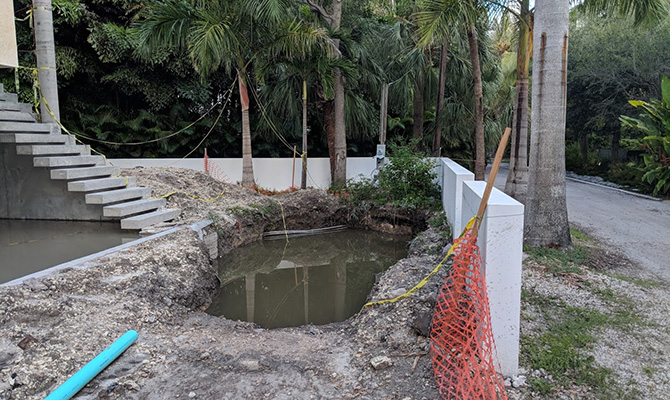
More than 120,000 septic systems remain in Miami-Dade County. These aging systems are polluting groundwater and Biscayne Bay—and sea level rise is making the problem worse.
What is A Septic system?
Most homes treat wastewater in one of two ways: through a municipal sewer system or a private septic system.
A septic system collects wastewater in an underground tank. Liquid wastewater then flows into a drainfield, where it is naturally treated as it filters through the surrounding soil before reaching groundwater.

Septic Tanks Weren’t Built for South Florida
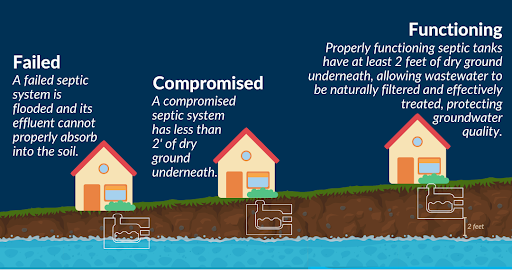
A properly functioning septic system depends on at least two feet of dry, unsaturated soil beneath the drainfield to naturally remove bacteria, nutrients, and other pollutants.
South Florida’s shallow groundwater table and porous limestone make that difficult. Instead of filtering wastewater, our geology allows pollutants to move quickly into the Biscayne Aquifer and nearby waterways. As sea level rises, groundwater rises too, leaving even less dry soil for septic systems to work properly.
Why it Matters
When septic systems can’t properly treat wastewater, pollution can reach our groundwater and waterways, contributing to:
- Bacteria contamination
- Nutrient pollution
- Algal blooms
- Fish kills
- Public health risks
Because groundwater and Biscayne Bay are closely connected, pollution doesn’t stay in one place—it spreads throughout our watershed.
What you can do
If your property uses a septic system:
- Pump your system every 3–5 years.
- Conserve water to reduce strain on your system.
- Never flush grease, wipes, or harsh chemicals.
- Protect your drainfield from vehicles and deep-rooted plants.
- Find out whether your property uses a septic system.