
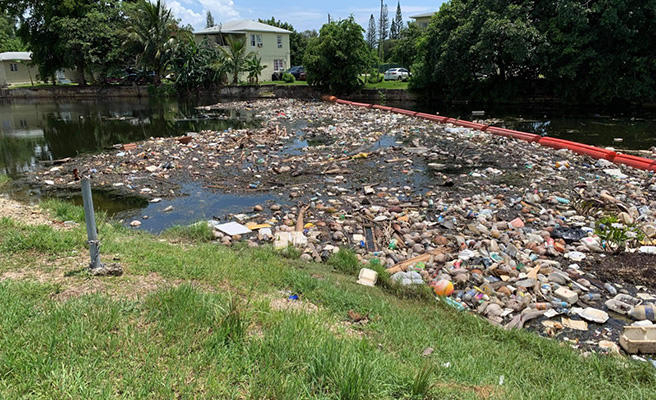
Trash in our waterways harms wildlife, damages habitats, and threatens public health. Together, we can prevent pollution before it reaches Biscayne Bay.
A Growing Pollution Problem
Every day, consumer plastics, metals, rubber, paper, textiles, derelict fishing gear, and other lost or discarded items find their way into our oceans, making marine debris a pervasive pollution problem affecting waterways, wildlife, environments, economies, and public health. Sources of marine debris are diverse, spanning from everyday consumer items to abandoned vessels.
Most of this debris comes from everyday activities like littering, dumping, boating, and shoreline recreation. Once in the water, it spreads quickly and becomes difficult to remove.
This issue is particularly impactful in the delicate ecosystem of Biscayne Bay.
Impacts of Marine Debris
Marine debris affects ecosystems, wildlife, and public health in multiple ways:
- Ingestion: Animals often mistake debris for food, which can cause internal injuries, and blockages, and lead to malnutrition.
- Entanglement and Ghostfishing: Debris can entangle animals, and abandoned gear can continue to trap and kill marine organisms.
- Hazard to Navigation: Abandoned vessels or gear can lead to accidents, damage boats, and endanger human lives.
- Habitat Degradation: Debris can physically damage our habitats and affect biodiversity.
- Non-Native Species Introduction: Debris can serve as a vehicle for non-native species to new regions, which can disrupt local ecosystems and outcompete native species.
- Economic Cost: Trash comes with high costs, both in terms of cleaning up and in lost economic benefits from tourism and recreation.
Anti-Environmental Policy Challenges
Efforts to reduce marine debris are complicated by state-level preemption laws that limit local action.
These policies restrict measures such as plastic bag bans, polystyrene (Styrofoam) bans, and certain product regulations.
Addressing marine debris requires coordinated solutions—local action, state policy change, and community engagement.