
For Immediate Release, August 13, 2026
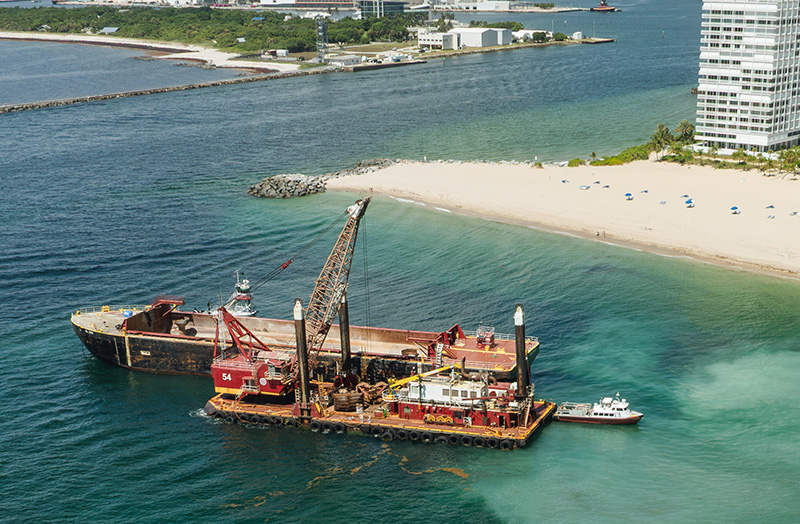
The U.S. Army Corps of Engineers has agreed to halt authorization of all dredging activity for Broward County’s Port Everglades Inlet Sand Bypass Project. The halt comes less than a week after conservation groups filed a lawsuit challenging federal agencies’ permitting process for the project because it threatens imperiled marine species like staghorn coral and queen conch. The project involves dredging a 10.8-acre sand pit north of the inlet to capture sand to later use for beach renourishment.
In an Aug. 7 letter to the National Marine Fisheries Service, the Corps acknowledged that recent underwater surveys revealed the project may have exceeded limits for “incidental take” – meaning harms or deaths – of threatened staghorn coral. The Corps agreed to reinitiate consultation with the National Marine Fisheries Service to assess environmental risks and ways to minimize ecological damage.
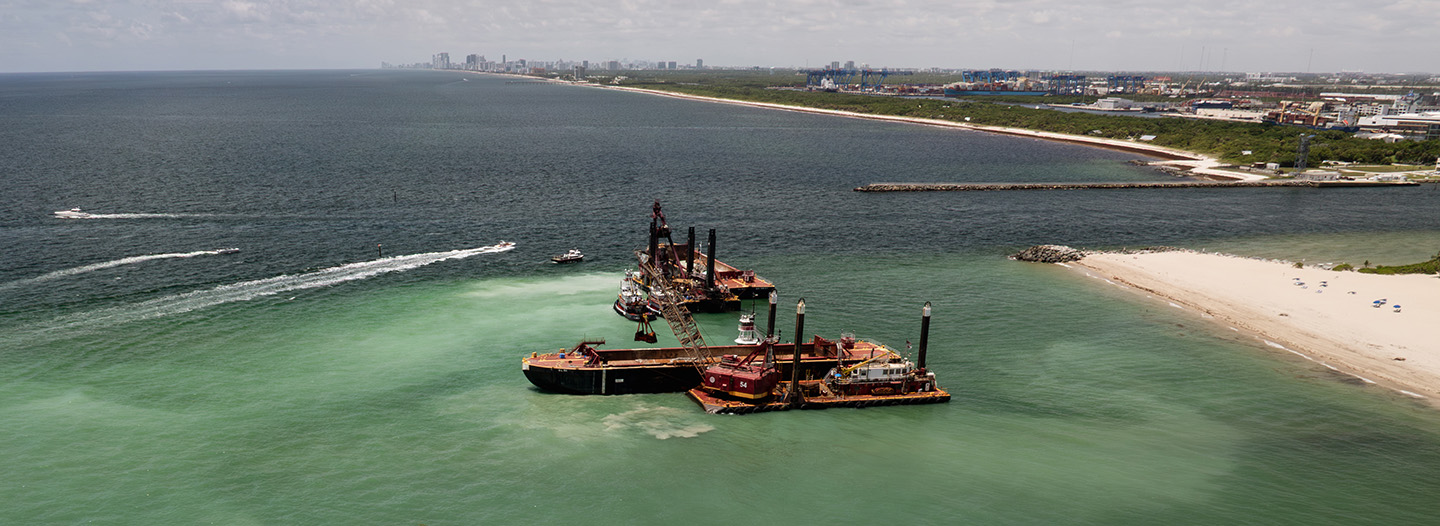
According to the joint motion and related documents filed by the parties on Monday, the Corps has agreed that dredging won’t resume before that environmental consultation concludes, stating the agency had “notified Broward County that no dredging under the project is authorized until consultation is complete and not until November 2026 at the earliest.”
“After months of ignoring the need for improved protections for these corals, the agencies have finally acknowledged that the alarm bells we raised were justified,” said Rachel Silverstein, CEO and Waterkeeper at Miami Waterkeeper. “The speed with which the Army Corps capitulated after we filed our legal action, agreeing to halt the dredging and revisit environmental assumptions almost immediately, shows just how blatant the project’s threats really are.”
“We’re glad the Corps decided to hit pause on this project in response to our lawsuit,’ said Earthjustice Senior Attorney Danika Desai. “The corals and queen conch the project threatens are crucial to the health of the Florida Coral Reef and we will continue to push the agencies to give these species the full protection they deserve and that’s guaranteed to them under the Endangered Species Act.”
“I hope the Army Corps’ decision to stop dredging for now is a good sign that the federal government is ready to take the conservation of Florida’s coral and queen conch seriously,” said Alex Muir, an associate attorney at the Center for Biological Diversity. “We won’t stop our work until these threatened marine species and their habitat are given the protection they’re entitled to.”
“This lawsuit is about protecting essential habitat, and this pause shows why this fight matters,” said Jess Melkun, Vice President of Conservation Policy at the Florida Wildlife Federation. “Everyone benefits from healthy reefs and coastlines, so we are cautiously optimistic that the Army Corps is finally taking a hard look at the science.”
Contacts:
Dr. Rachel Silverstein, Miami Waterkeeper, (305) 905-0856, media@miamiwaterkeeper.org
Danika Desai, Earthjustice, (415) 217-2009, ddesai@earthjustice.org
Alex Muir, Center for Biological Diversity, (352) 432-0940 x472, amuir@biologicaldiversity.org
Morgan McClure, Florida Wildlife Federation, (863) 286-9095, morgan@fwfonline.org
Nicole Russell, Diving Equipment and Marketing Association, (858) 616-6408 x1007, nicole@dema.org