
Miami Waterkeeper featured in PBS Urban Nature Series

Urban Nature, a digital series on WTTW, the PBS member station in Chicago, recently did a segment on sea level rise in Miami. Our Executive Director, Rachel Silverstein, was featured in this segment discussing sea level rise and the additional problems Miami might face in the near future due to flooding. Miami is a low-lying […]

Back

Urban Nature, a digital series on WTTW, the PBS member station in Chicago, recently did a segment on sea level rise in Miami. Our Executive Director, Rachel Silverstein, was featured in this segment discussing sea level rise and the additional problems Miami might face in the near future due to flooding.

Miami is a low-lying city that is extremely susceptible to flooding and is already being affected by sea level rise. Sea levels in South Florida have already risen 8 inches this past century, and there is a projected rise of up to 7 feet, meaning parts of Miami could be submerged by 2100. Rachel discussed the damage rising sea levels can do to Miami’s infrastructure. 

“We’re looking at our energy infrastructure, our wastewater infrastructure, and our drinking water infrastructure all potentially failing to work in the not-too-distant future,” she said.

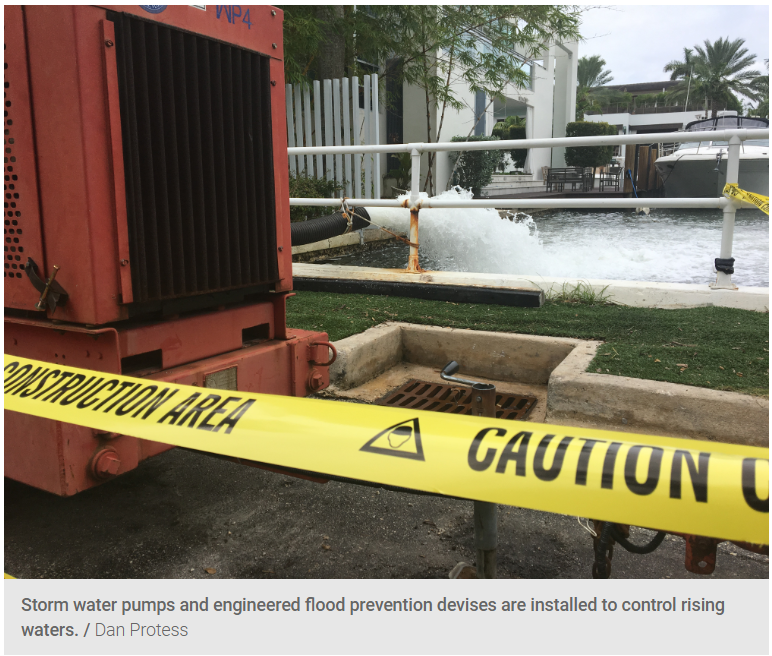
The episode features work by Miami Waterkeeper, Frost Science, and the City of Miami Beach. In an attempt to mitigate the effects of sea level rise, The City of Miami Beach has raised streets, installed pumping stations, and created seawalls. The Frost Science Center’s Museum Volunteers for the Environment are planting mangroves and restoring native dunes on Virginia Key to provide barriers against high tides and storm surges. Miami Waterkeeper is actively investigating water quality from stormwater outfalls across Miami-Dade County and conducting opportunistic water sampling where appropriate.

The Urban Nature series explores nature in the urban environments of America’s largest cities like New York, Chicago, Miami, San Francisco, and Austin. It’s hosted by Marcus Kronforst, a professor in the Department of Ecology & Evolution at the University of Chicago. You can view “A Rising Tide Drowns a City | Miami” online for free here

Originally published at https://www.miamiwaterkeeper.org/miami_waterkeeper_featured_in_pbs_urban_nature_series

Get updates about our work

We respect your privacy.

Media Coverage

Stories of Accountability & Recovery

Miami Waterkeeper has been cited by local and national outlets as a trusted source on South Florida water quality, policy, and environmental justice.

Press Release

NEWS: Corps Temporarily Halts Fort Lauderdale Dredging Project After Conservationists’ Lawsuit

August 13, 2026

For Immediate Release, August 13, 2026 The U.S. Army Corps of Engineers has agreed to halt authorization of all dredging activity for Broward County’s…

Press Release

Conservationists Challenge Dredging Project Near Port Everglades Over Endangered Species Act Violations

August 6, 2026

Miami Waterkeeper, the Center for Biological Diversity,  Florida Wildlife Federation and the Diving Equipment & Marketing Association sued the U.S. Army Corps of Engineers and the National Marine Fisheries Service on Tuesday for violating the Endangered Species Act when permitting a sand dredging project near Port Everglades….

Press Release

Miami-Dade Cities Overall Improve Stormwater Compliance, but Biscayne Bay is still at Risk

June 3, 2026

A coalition of environmental organizations released the Stormwater Report Card for Miami-Dade County, a comprehensive, independent assessment of how the county and its 34 municipal permittees manage polluted stormwater…

Support our work

We’re committed to transparency, accountability, and maximizing the impact of every dollar entrusted to us. Be part of the change and donate today!

Florida Solicitation of Contributions Registration #CH46021 A copy of the official registration and financial information for Biscayne Bay Waterkeeper (aka Miami Waterkeeper), a Florida-based nonprofit organization, may be obtained from the Division of Consumer Services by calling toll-free 1-800-HELP-FLA (435-7352) within the state or visiting www.800HELPFLA.com. Registration does not imply endorsement, approval, or recommendation by the state.