
Miami-Dade County’s Urban Development Boundary Still at Risk

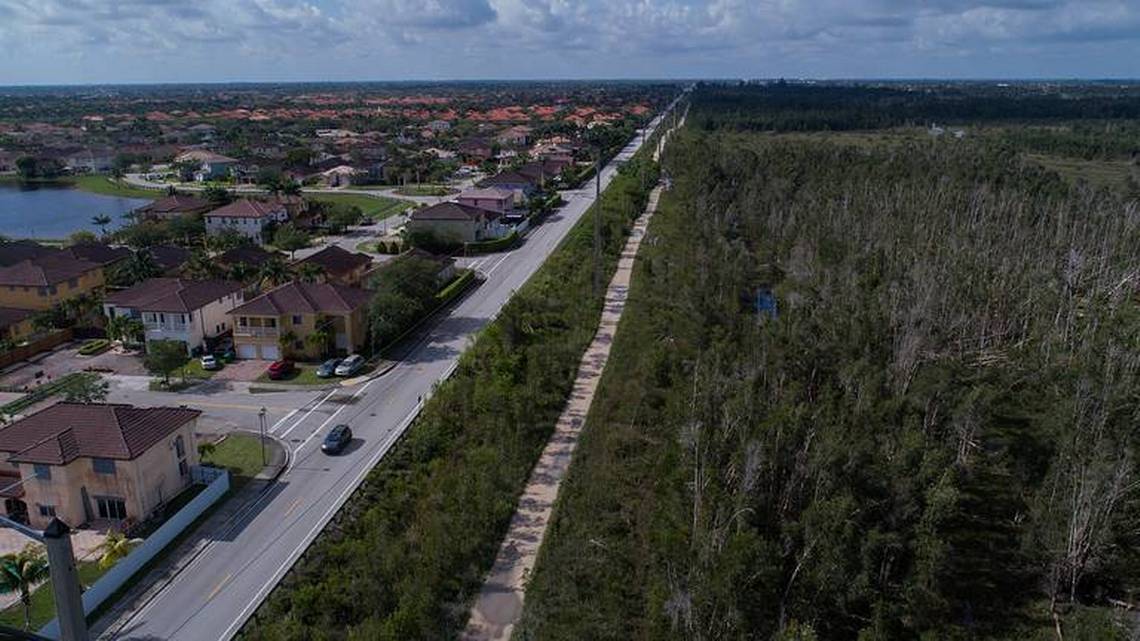
For decades, Miami-Dade has protected a bright line to stop urban sprawl into the Everglades, called the “Urban Development Boundary”; this is one of our best tools to protect the Everglades and our drinking water. Recently, you were asked to let our County Commissioners know that you want them to Hold the Line on Miami-Dade […]

Back

For decades, Miami-Dade has protected a bright line to stop urban sprawl into the Everglades, called the “Urban Development Boundary”; this is one of our best tools to protect the Everglades and our drinking water. Recently, you were asked to let our County Commissioners know that you want them to Hold the Line on Miami-Dade County’s Urban Development Boundary and deny moving the boundary to accommodate a nearly 800-acre industrial development outside of it. A total of 786 community members advocated for natural resource protection and voiced their opposition to high-impact development beyond this boundary.

The final vote was scheduled for May 19, 2022, at County Hall. The chambers were completely packed, with many more outside the meeting room. The developers needed to secure the votes of nine of the county commissioners. 

After a tense and dramatic day of public comments, presentations, and debate, the County Commission voted 5-7 on a motion to deny moving the Urban Development Boundary. With the developers realizing they did not have the nine votes needed to move forward–Commissioners agreed to hold a third and final vote the following week, on Wednesday, June 1. The applicant for the project asked for the vote to be deferred. The line is held. 

Another vote is scheduled to take place on September 22, 2022.

Building this massive project represents a significant threat to Biscayne Bay, the Everglades, our agricultural community, and our drinking water. While we are disappointed that this development has not yet been voted down, we are using this opportunity to continue to spread the word about this threat to the Urban Development Boundary, the future of Biscayne Bay, the Everglades, and our community.

Originally published at https://www.miamiwaterkeeper.org/mdcs_udb_still_at_risk

Get updates about our work

We respect your privacy.

Media Coverage

Stories of Accountability & Recovery

Miami Waterkeeper has been cited by local and national outlets as a trusted source on South Florida water quality, policy, and environmental justice.

Press Release

NEWS: Corps Temporarily Halts Fort Lauderdale Dredging Project After Conservationists’ Lawsuit

August 13, 2026

For Immediate Release, August 13, 2026 The U.S. Army Corps of Engineers has agreed to halt authorization of all dredging activity for Broward County’s…

Press Release

Conservationists Challenge Dredging Project Near Port Everglades Over Endangered Species Act Violations

August 6, 2026

Miami Waterkeeper, the Center for Biological Diversity,  Florida Wildlife Federation and the Diving Equipment & Marketing Association sued the U.S. Army Corps of Engineers and the National Marine Fisheries Service on Tuesday for violating the Endangered Species Act when permitting a sand dredging project near Port Everglades….

Press Release

Miami-Dade Cities Overall Improve Stormwater Compliance, but Biscayne Bay is still at Risk

June 3, 2026

A coalition of environmental organizations released the Stormwater Report Card for Miami-Dade County, a comprehensive, independent assessment of how the county and its 34 municipal permittees manage polluted stormwater…

Support our work

We’re committed to transparency, accountability, and maximizing the impact of every dollar entrusted to us. Be part of the change and donate today!

Florida Solicitation of Contributions Registration #CH46021 A copy of the official registration and financial information for Biscayne Bay Waterkeeper (aka Miami Waterkeeper), a Florida-based nonprofit organization, may be obtained from the Division of Consumer Services by calling toll-free 1-800-HELP-FLA (435-7352) within the state or visiting www.800HELPFLA.com. Registration does not imply endorsement, approval, or recommendation by the state.