
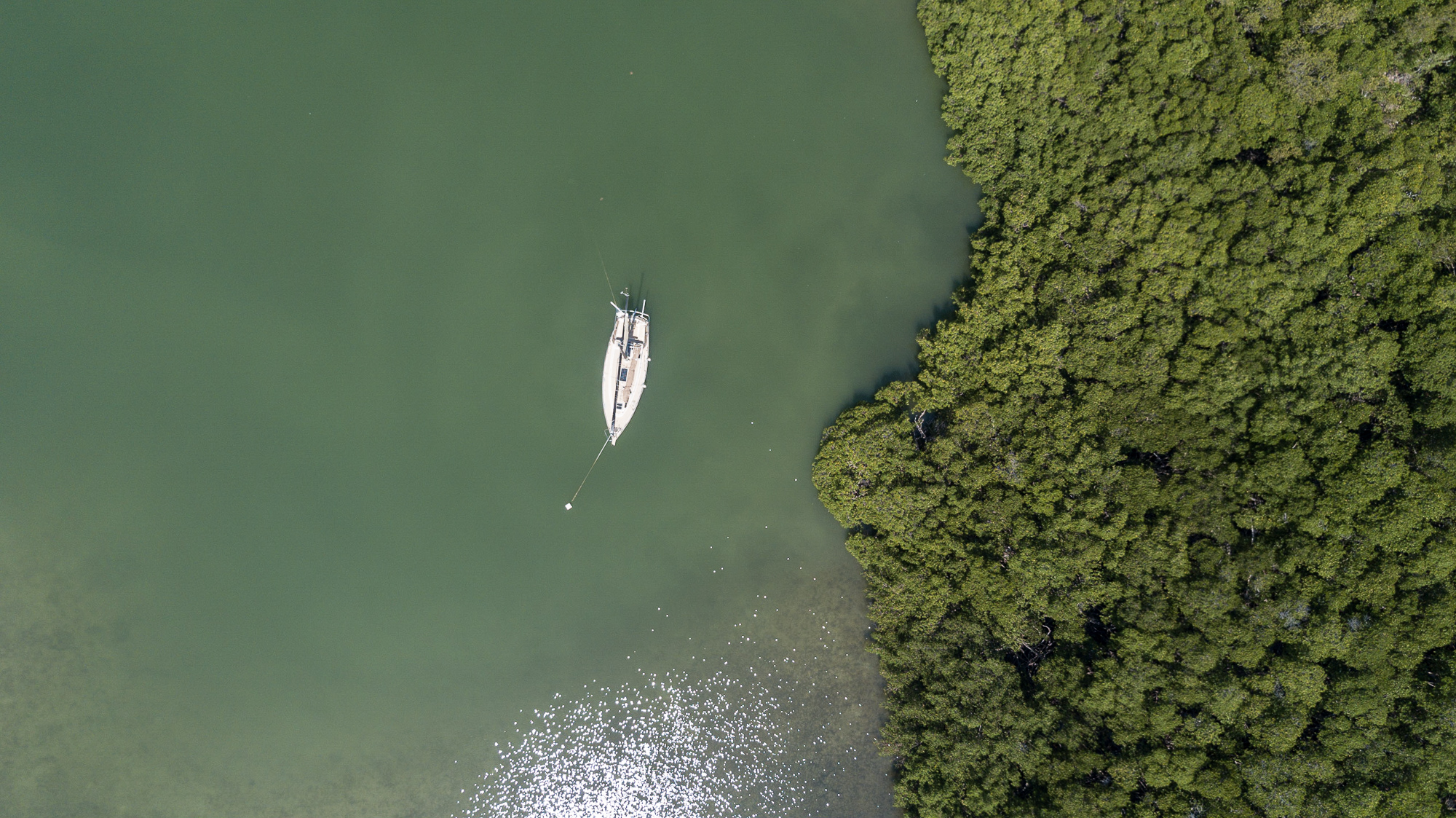
Miami Waterkeeper submitted comments to the U.S. Army Corps of Engineers regarding the National Environmental Policy Act (NEPA) analysis and Miami-Dade Back Bay Coastal Storm Risk Management Feasibility Study that the Corps will carry out. The study will examine how to reduce risk from coastal storms and flooding for the Back Bay portion of Biscayne Bay, a densely populated area at a low elevation. Miami Waterkeeper requested that the Corps conduct an Environmental Impact Study, not solely an Environmental Assessment, in order to comprehensively examine the region’s conditions. Particularly, the Corps should (1) prioritize natural and nature-based features (NNBF) in any risk reduction strategy and (2) measure potential benefits in an equitable way that is not simply based on real estate values.

With the potential to adapt to climate change, NNBF tends to be less expensive to build and maintain than grey infrastructure (e.g. artificial breakwaters, seawalls, and pumps) and can be self-sustaining. Examples of NNBF include restored dunes, coastal wetlands, mangroves, and coral reefs. Seawalls and other grey infrastructure are less effective in Miami-Dade County as water can seep through the porous limestone underlying the region. Therefore, truly effective seawalls would require drilling down past the limestone, an economically and logistically impossible undertaking. A comprehensive study of NNBF showed that coastal habitats can cost less than grey infrastructure and can significantly reduce wave heights and protect shoreline (here, coral reefs and salt marshes reduced wave heights by around 70%).
Additionally, NNBF provides ecosystem services, such as fisheries habitat, recreation value, carbon sequestration, and water quality improvement. As a major tourist destination, Miami could benefit immensely from increased recreational value from NNBF, especially the coastal hotels that secure billions of dollars for the local economy. According to federal guidance on the Water Resources Development Act of 2016, study teams must consider NNBF and the benefits of ecosystem services. Considering the aforementioned benefits of NNBF, Miami Waterkeeper requested that the Corps prioritize NNBF in developing coastal storm risk reduction strategies.
Secondly, Miami Waterkeeper urged the Corps to measure the potential benefits of its plans equitably. Traditional feasibility studies are usually based on real estate values when examining the costs and benefits of potential projects. High-value properties are more likely to benefit from protection features, often at the expense of historically vulnerable communities. Additionally, climate gentrification may force lower-income communities into more at-risk and lower elevation areas. However, an Executive Order requires the Corps to address the human health and environmental impacts of its policies and activities on minority and low-income populations. Due to these factors, storm risk mitigation strategies must be equitable, as flooding especially poses a risk to public health in areas that lack adequate medical services. As a result of South Florida’s porous geology and relatively flat elevation, coastal flooding can cause negative impacts in the region beyond direct damage near the shoreline.
Read Miami Waterkeeper’s full technical comments to the Army Corps of Engineers HERE and HERE.
Originally published at https://www.miamiwaterkeeper.org/miami_waterkeeper_weighs_in_on_army_corps_resiliency_projects