
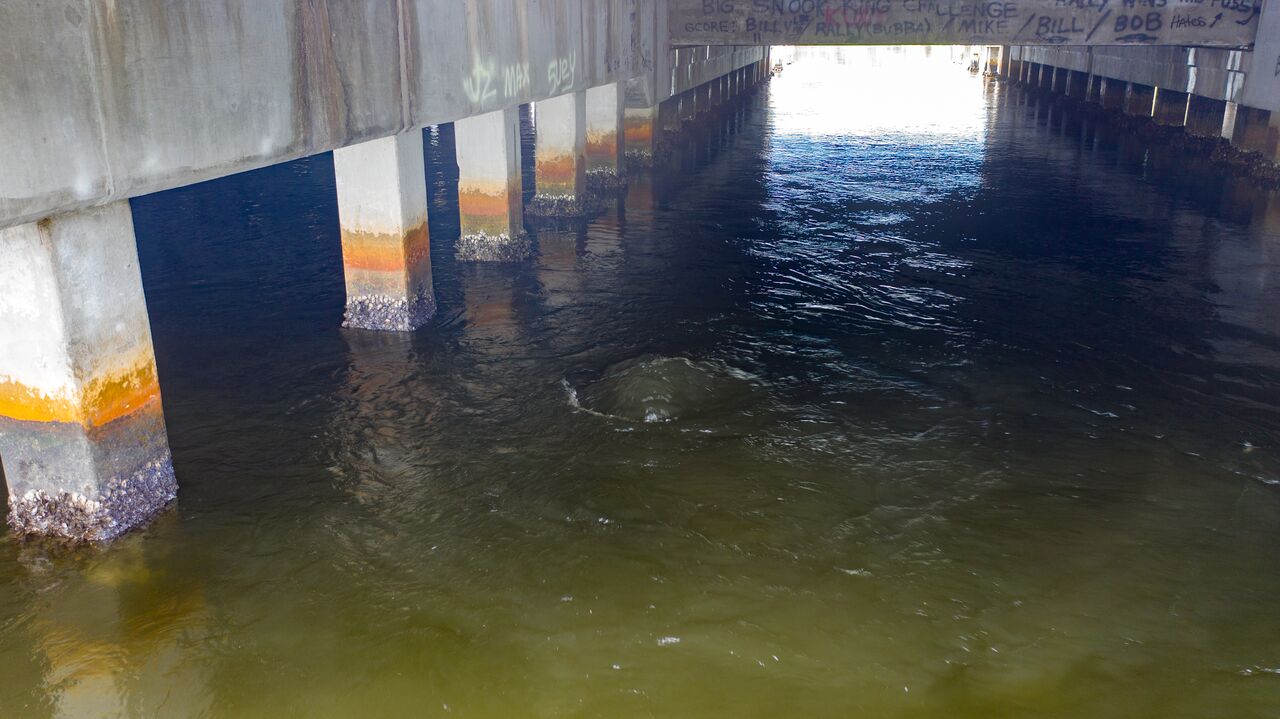
This August, a kayaker reported water bubbling up under a bridge near Oleta River State Park. An inspection revealed a crack in a 50-year-old iron sewer pipe which was causing raw sewage to escape into the Oleta River. More than a million gallons of sewage spilled into the river where the pipe is buried in the river bottom. When the Miami Dade Water and Sewer Department tried to plug the crack, it grew by 50%. Workers tried to divert the sewage to another line, but the other line was also in danger of failing because it was very old as well. As it turns out, repairs to this pipe had been delayed several times over the past ten years. In fact, the pipe should have been replaced more than 5 years ago according to budget records from the County. Five years too late as this pipe failure resulted in approximately 1.6 million gallons of raw sewage being spilled into our waters and no-swim advisories being issued for a 40-block area around the spill.

Oleta River spill spotted by a kayaker in August 2019 — Photo by Greg Clark
Sewage leaks are a problem because they not only cause severe environmental damage, they also pose a serious health and safety risk to people. Sewage leaks can contaminate bodies of water with bacteria that can be dangerous in large quantities. Nutrients in raw sewage can also contribute to the production of algae blooms that can cause harm to wildlife and ecologically important ecosystems.
Our Executive Director, Rachel Silverstein, says that inspections of our sewage lines should be done regularly so that situations like these are avoided. Two years ago, Miami Waterkeeper threatened to sue the county after a citizen complained about a break in an ocean outfall pipe near Virginia Key that hadn’t been inspected for more than a decade. After threatening to sue, the county repaired the line in just a few days. Only 1/10th of the underground sewer pipes are inspected every year in this county. Vulnerabilities in the pipes are not usually discovered until leaks occur. With regular inspections, repairs, and maintenance, sewage leaks like this are less likely to occur and cause damage.
Miami Waterkeeper recently attended the Miami Dade County budget hearings where we voiced concerns about proposed cuts in the Miami Dade Water and Sewer Department (WASD) budget. WASD has attributed the ongoing and prolific sewage leaks to a maintenance backlog due to an “underfunded” department. Our advocacy at the budget hearing resulted in some measurable outcomes for investment in water infrastructure through fiscal year 2020. Read more here.

Stay up to date with Swim Guide
We want you to stay up to date on whether or not sewage spills are impacting the waters you enjoy!
Download Miami Waterkeeper’s free Swim Guide app to learn which beaches in your area are safe for swimming (green) and which beaches are not (red). Miami Waterkeeper obtains data on fecal indicator bacteria counts at area beaches and other locations through our weekly in-house water quality monitoring efforts. We post the results of our sampling online so our community knows when it is safe or not safe to swim. Check out the app for access to real-time water quality data!
Please contact [email protected] for more information about sponsoring a water quality monitoring site on Swim Guide!
Get your eyes on the water!
This sewage spill would have gone unnoticed for an undetermined amount of time if not for a kayaker reporting the leak! We want to give you the tools you need to learn how to identify, document, and report pollution on or near our waters. Join us for a free upcoming 1,000 Eyes on the Water training to get involved as a watchdog for our waterways! Check out our upcoming events here.
Please contact [email protected] for more information on corporate underwriting opportunities for 1,000 Eyes on the Water trainings!
Originally published at https://www.miamiwaterkeeper.org/oleta_river_sewer_spill