
Research Evaluating Sources of Nutrients and Bacteria in Biscayne Bay Has Started!

Miami Waterkeeper is honored to share that a new research project has started with grant funding from the Environmental Protection Agency (EPA)! The EPA awarded this funding to a research team led by Miami Waterkeeper and Florida International University (FIU) to study the levels of fecal indicator bacteria and nutrient pollution in Biscayne Bay.  Miami […]

Back

Miami Waterkeeper is honored to share that a new research project has started with grant funding from the Environmental Protection Agency (EPA)! The EPA awarded this funding to a research team led by Miami Waterkeeper and Florida International University (FIU) to study the levels of fecal indicator bacteria and nutrient pollution in Biscayne Bay. 

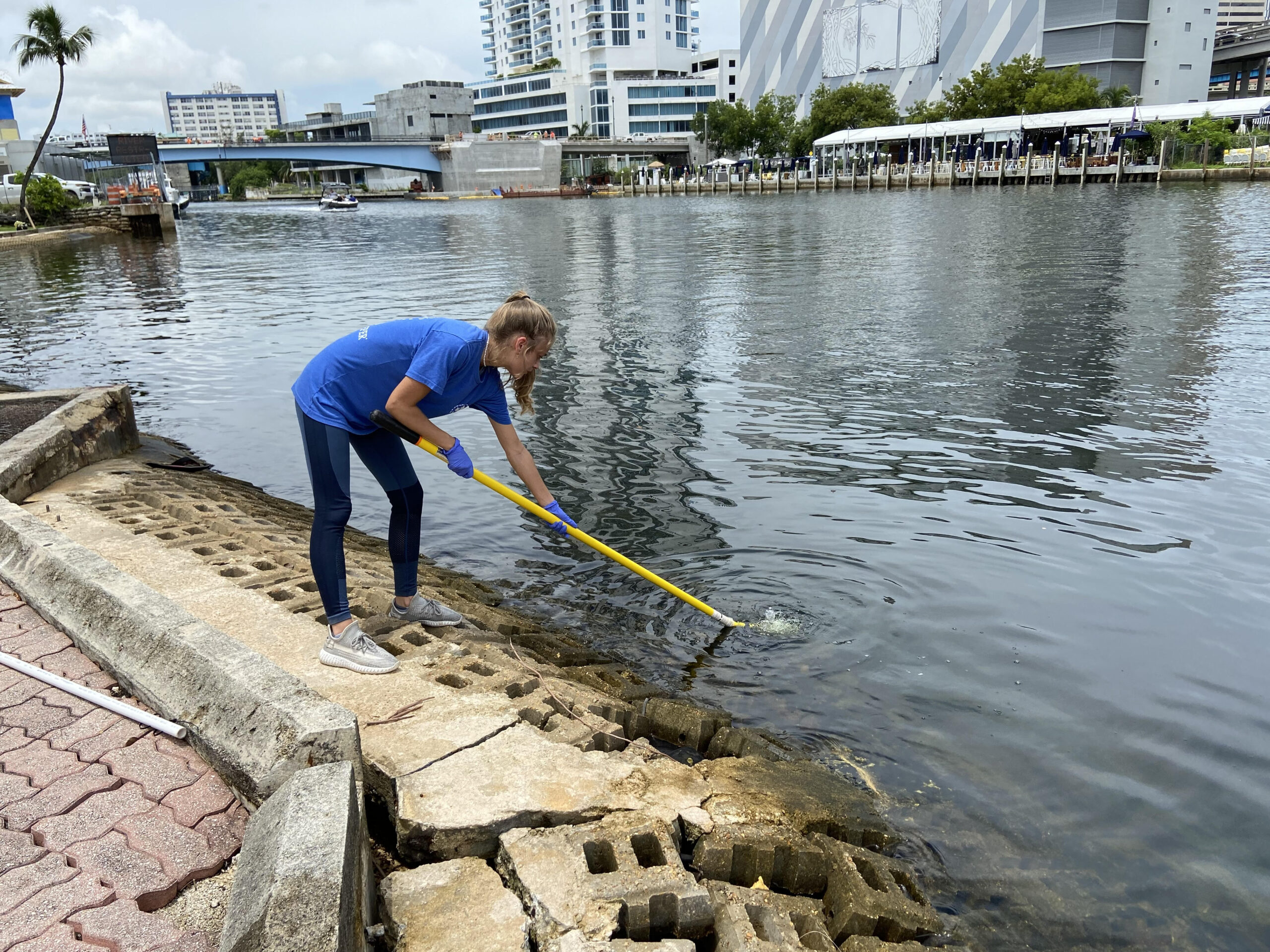
Miami Waterkeeper Field Technician, Sierra Jarriel, and Water Quality Intern, Sofia Bond, filtering a water sample at Jose Marti Park in Miami-Dade County (MDC).


As we saw in August of 2020, with the widespread fish kill and algae bloom events, our Bay needs our help. Scientists agree that nutrient pollution is a major threat to Biscayne Bay. This nutrient pollution is believed to be coming from sources like sewage leaks, septic tanks, stormwater runoff, and fertilizer. Click here to read our consensus statement about what lead to last year’s fish kill.

The purpose of this collaborative research study is to further understand how canal discharge and land-based sources of pollution are impacting the Bay by sampling at 22 sites throughout central and northern Biscayne Bay for one year. This study is critical as it will give us more in-depth reasoning as to why fish kill and seagrass die-offs occur to plan ahead. 

A closer view of the filtered sample taken at Jose Marti Park in MDC. 


Partners involved in the “Evaluating Sources of Nutrients and Enterococci in Biscayne Bay, Florida” study include Dr. Tiffany Troxler and Dr. Piero Gardinali from FIU, Dr. Peter Swart from the University of Miami (UM), Sean Ahearn from Beta Analytic, and Dr. Maribeth Gidley from UM’s Cooperative Institute for Marine and Atmospheric Studies.


To learn more about the parameters and specific questions this study aims to answer, click HERE. 

Click the image below for a downloadable one-pager with all the information on this study!

Originally published at https://www.miamiwaterkeeper.org/epa_grant_has_begun

Get updates about our work

We respect your privacy.

Media Coverage

Stories of Accountability & Recovery

Miami Waterkeeper has been cited by local and national outlets as a trusted source on South Florida water quality, policy, and environmental justice.

Miami Herald

A developer financed a film on what ails Miami. He says developers can do better

September 14, 2026

The Miami Herald previewed “The Future We Build,” a new short documentary on the compounding crises facing Miami, opening with environmental advocate Rachel Silverstein…

Read more

Italy Report USA

Miami Beach Promossa a Pieni Voti nella Gestione delle Acque Piovane

August 29, 2026

Italy Report USA reported on the Stormwater Report Card — produced by Miami Waterkeeper with the Everglades Law Center and the University of Miami’s environmental program — highlighting Miami Beach’s strong marks for managing stormwater….

Read more

WTVJ-TV – NBC 6 South Florida

Another Dredging Project on Hold in Broward Amid Coral and Conch Concerns

August 21, 2026

NBC 6 South Florida covered the pause on another Broward dredging project amid concerns for coral and queen conch, quoting Miami Waterkeeper CEO Rachel Silverstein on a coral she described as “functionally extinct in the state of Florida.” Our group is one of those behind the challenge….

Read more

Support our work

We’re committed to transparency, accountability, and maximizing the impact of every dollar entrusted to us. Be part of the change and donate today!

Florida Solicitation of Contributions Registration #CH46021 A copy of the official registration and financial information for Biscayne Bay Waterkeeper (aka Miami Waterkeeper), a Florida-based nonprofit organization, may be obtained from the Division of Consumer Services by calling toll-free 1-800-HELP-FLA (435-7352) within the state or visiting www.800HELPFLA.com. Registration does not imply endorsement, approval, or recommendation by the state.